The Wrong Side of the Delaware
Based on the Revolutionary War Diary of Johannes Reuber, a 17-Year-Old Hessian Soldier
Werner Brandau’s account of Reuber’s journey, checked against the sources for the first time, with Reuber’s own drawings. In English and in German, in paperback and as an e-book. The German edition has a title of its own.
- English edition, The Wrong Side of the Delaware, published November 16, 2026 · ISBN 978-3-912050-15-8 Paperback on Amazon E-book on Amazon Also on Amazon Germany: Paperback · E-book
- German edition: in preparation.
To be notified, write to info@cbb-verlag.de.
This page carries the publisher’s introduction and the foreword by Werner Brandau.
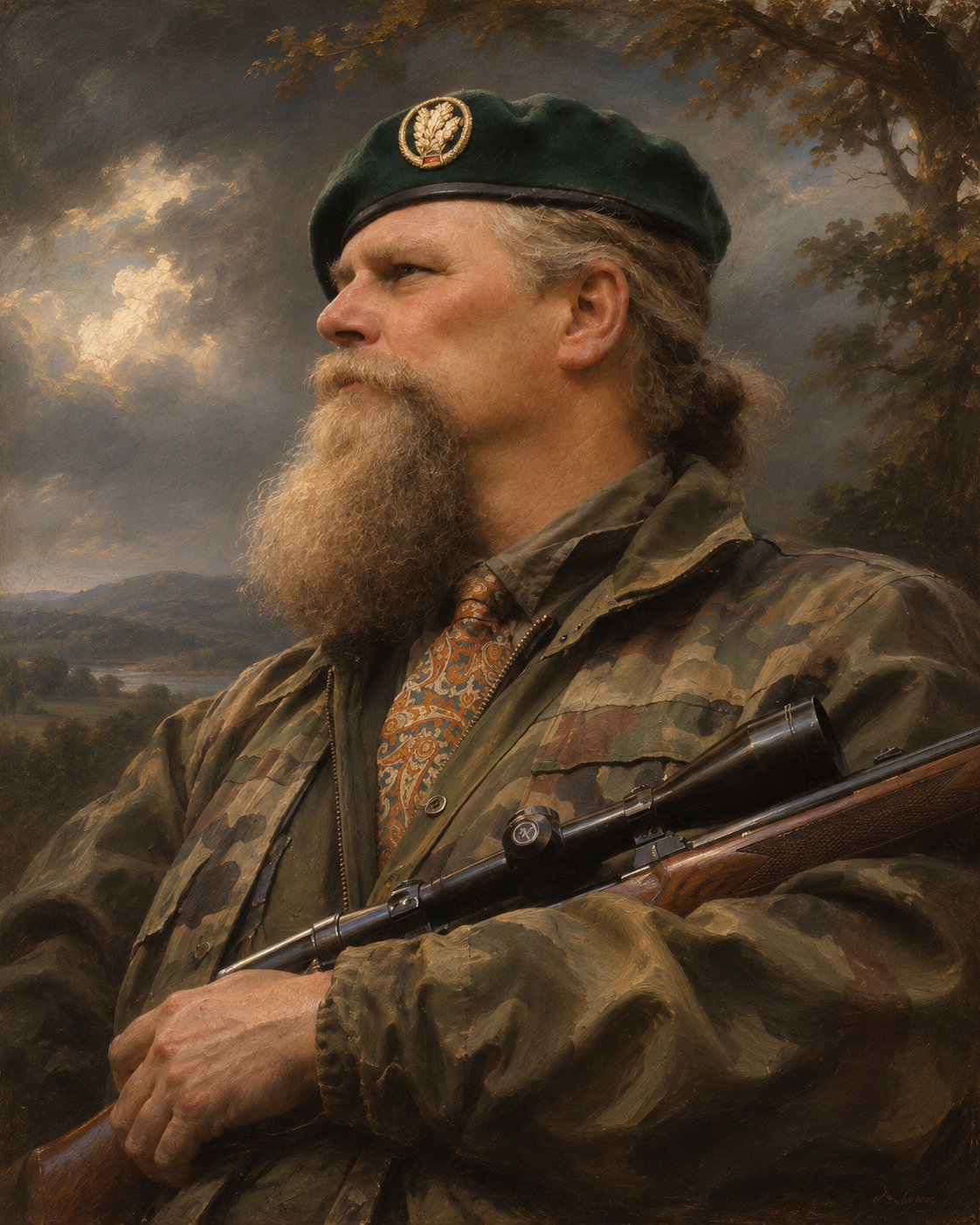
How This Book Came About
- In 1776 the Landgrave of Hesse-Cassel hires out soldiers to Britain. In the end almost 17,000 men go to America.
- One of them is Johannes Reuber from Niedervellmar near Kassel, seventeen years old. He storms Fort Washington, is captured at Trenton and comes home after seven and a half years.
- He writes everything down. His diary is still kept in Kassel.
- The editor came to the story through a friend whose ancestor jumped into the castle moat instead of going aboard.
- December 26, 2026, marks 250 years since Trenton.
Rearranged for the web: in the book the introduction runs in a different order. Apart from two transitions the wording is the same.
The Day New York Fell
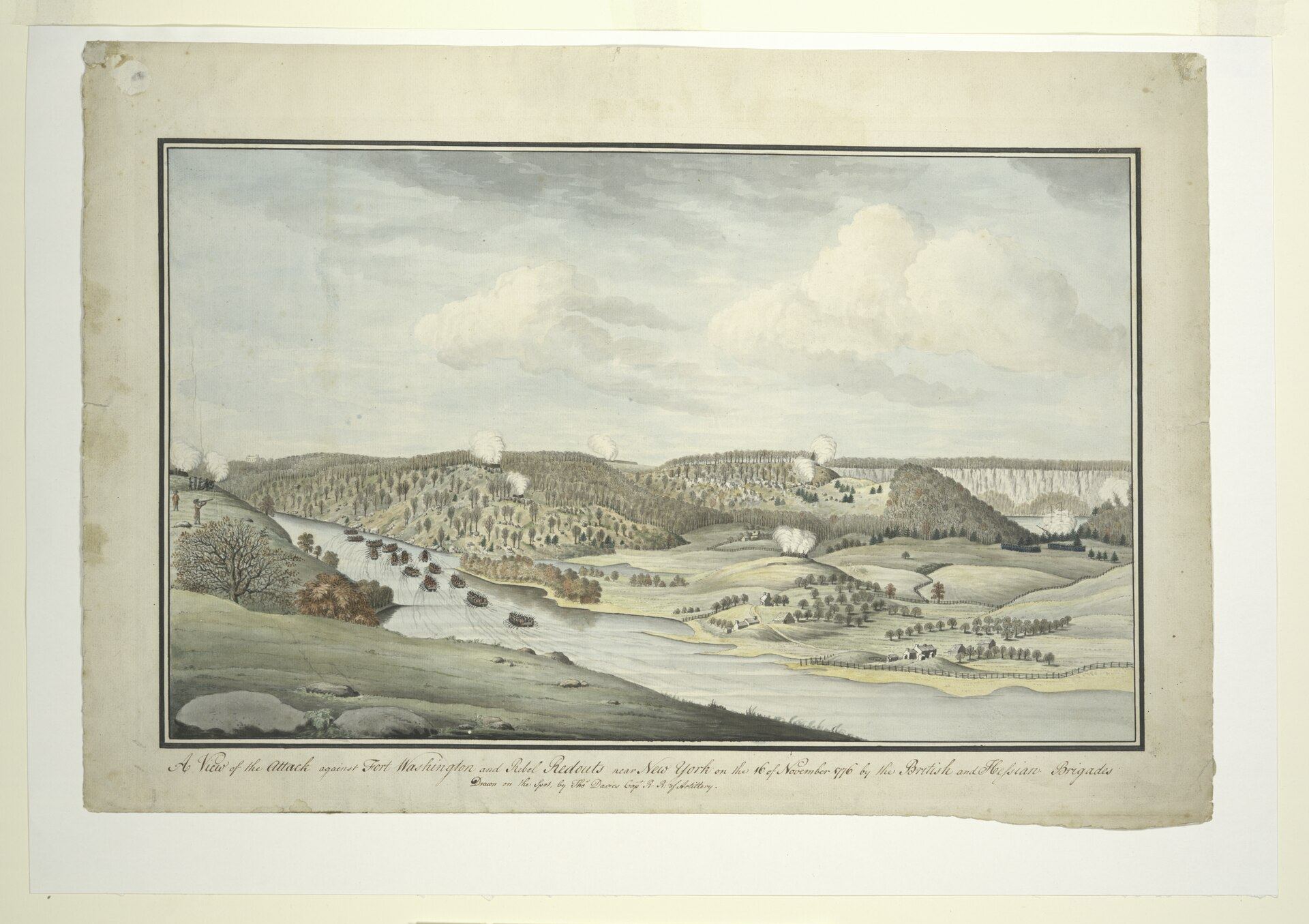
Four months after the Declaration of Independence, America had to surrender its last fortress on Manhattan. To a German.
Early morning, November 16, 1776. Hessian grenadiers are climbing the rocks above the Hudson under fire. At the top lies Fort Washington. Among the rocks, riflemen from Maryland and Virginia lie in wait with their long rifles, and they hit what they aim at. The Hessians keep climbing. One of the two assault columns is led by Colonel Johann Rall. By afternoon it is over. The American commander hands the fort over to the Hessian general Knyphausen, and Hessian soldiers march 2,837 Americans off into captivity. The victors even take the fort’s name: Fort Washington becomes Fort Knyphausen.
For seven years New York belongs to the British Crown. When the last British troops finally leave in November 1783, New Yorkers celebrate that day for more than a century, year after year.
How many Americans know that their greatest city was taken with German help? And how many Hessians know it?
Among the men storming the hill is a seventeen-year-old boy from Niedervellmar, a village near Kassel. His prince has rented him out to Britain, for hard cash. The prince collects; the boy climbs. His name is Johannes Reuber. And he writes everything down, just the way he hears it: Trenton becomes “Trin Daun.”
The prince collects; the boy climbs.
Less than six weeks after this victory he is a prisoner of the Americans himself. Will he ever see his village again?
The Story of a Boy
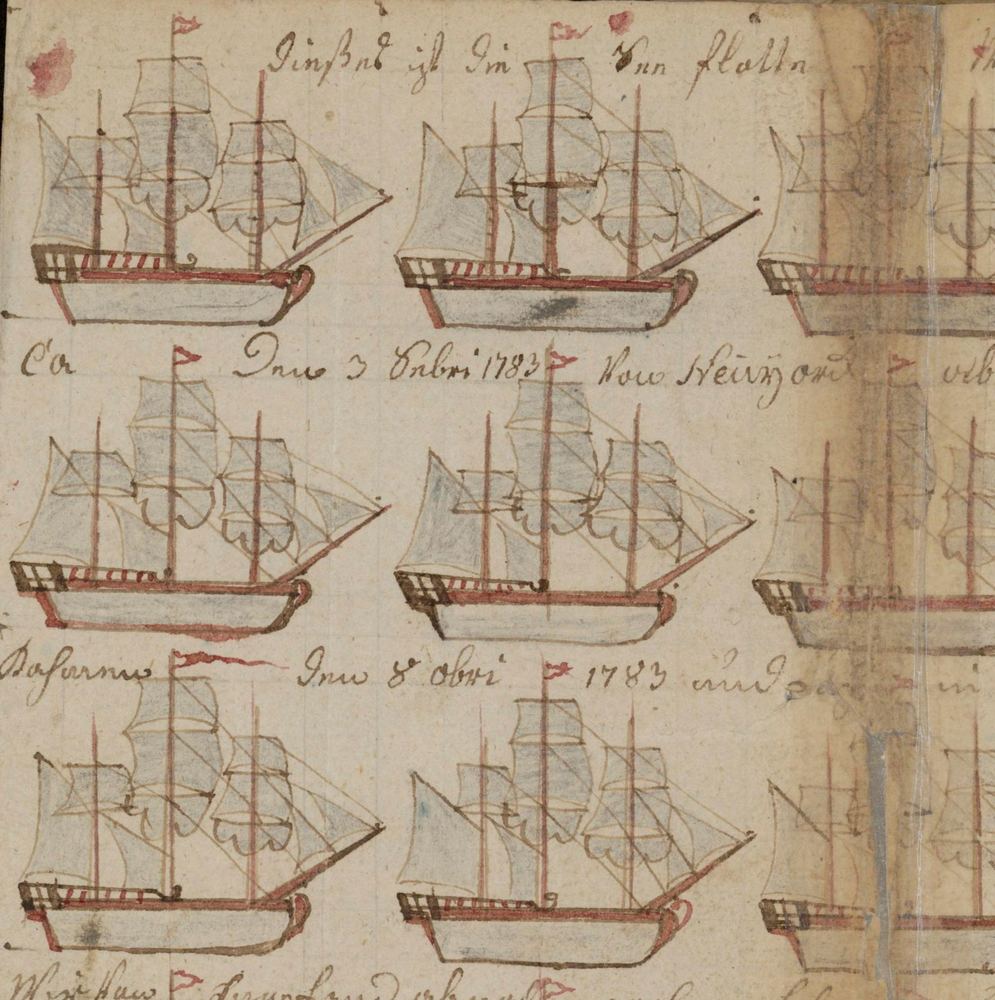
For me this is above all the story of a boy. At sixteen he is called up; at seventeen he crosses the Atlantic in the belly of a sailing ship, packed into wooden bunks. He fights on Long Island, at White Plains and on the Hudson. He is captured, marched through Philadelphia and held as a prisoner in Lancaster and Winchester. Later he goes south with his regiment to Savannah and Charleston and wades through rivers with his cartridge box on his head. Mel Gibson’s film “The Patriot” is set in South Carolina in exactly those years. There are no Hessians in it. In this book there are. After seven and a half years Reuber comes home. Not quite ten years later he sets out again, against the French, to Mainz and to Flanders. This edition includes that part of his story too, which hardly anyone knows.
In 1972 Howard Fast, the author of “Spartacus,” wrote a novel about a Hessian drummer boy, fifteen or sixteen years old. He is captured, tried and hanged. That boy is made up, just like Tom Sawyer. Johannes Reuber is not. He lived his adventures, survived them and wrote them down, with drawings of ships, forts and towns.
How I Came to This Story
By chance. About twenty-five years ago, at work in northern Hesse, I met a man from a North American company: Markus Lemke, a Canadian and a Hessian at the same time. As we talked, it turned out that he, too, through his mother’s family, descends from a Hessian who was supposed to go to America for the Landgrave.
For years I believed his ancestor had stayed in America after the war, like more than a thousand others. Not at all. I had thoroughly misunderstood the story about the ship and the jump into the water. I thought it had all happened off the American coast. In fact the man had made a much wiser decision: instead of going to war in America for the Landgrave, he jumped from the battlements into the castle moat.
That is how his mother’s family, the Semlers, tell it: their ancestor was seized, because he was to be shipped to America as a Hessian soldier. He was held in a castle. In the night before the ship was to sail, he and his best friend escaped. They jumped down into the water, into the moat or perhaps into the river beside it, and made their way to Sichelnstein. There the mayor gave them refuge. This Semler never went to war.
Markus himself puts it with a wink: he is related to a Hessian who did not go off to war as a brave soldier but managed to dodge the draft.
Reuber went aboard. Semler jumped into the moat. One wrote a diary, the other wrote family history. Without the one, there would be no book; without the other, no friend of mine.
Reuber went aboard. Semler jumped into the moat.
The runaway was an ancestor of Markus’s grandfather Gustav Semler. The family made it across the Atlantic in the end anyway, only almost two centuries later and entirely of their own free will: in the 1950s Gustav Semler emigrated to Canada with his family.
The world is a village, and Kassel even more so. In the 1940s Gustav Semler worked as a machinist at Henschel in Kassel, in the same plant where, decades later, I worked for Rheinmetall. The Lemkes, for their part, came from East Prussia. Markus’s parents only met in Canada, both of them immigrants after the war. East Prussia and northern Hesse had to cross the Atlantic to find each other.
That leaves the name. A Semmler was once the baker who baked Semmeln, bread rolls. Somewhere on the way through the centuries the family lost an m. Two of Markus’s cousins, Edgar and Gerald Semler, have closed the circle anyway: today they run a craft bakery in Edmonton. The m was lost; the rolls were not.
The encounter became a friendship, and the friendship a search for traces: with Markus and his family, with Werner Brandau in Vellmar, and with the University Library in Kassel, which keeps Reuber’s diary to this day.
Perhaps it was not entirely chance after all. A Kassel Jäger who picks up the trail of a Hessian soldier does not let go so easily.
The Jäger from Kassel

I am a Kassel Jäger myself. I served in that tradition, and that is why one part of this story is especially close to my heart.
In 1776 Hesse-Cassel sent not only grenadiers and musketeers across the Atlantic. What the British wanted most of all were Jäger, huntsmen. The Jäger are considered a Hessian invention. Landgrave William V of Hesse-Cassel is said to have raised the first Jäger in the German-speaking world in 1631, from hunters and foresters. Prussia and other German states soon set up Jäger of their own. And the name Feldjäger, which Hessian Jäger were the first to bear, is still the name of the German army’s military police today.
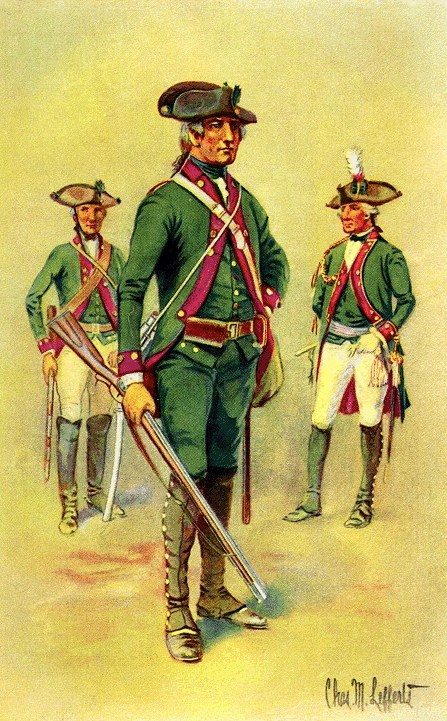
These Jäger were no farm boys picked up off the road. They were real hunters, foresters and gamekeepers’ lads, raised with the rifled gun they used at home to hunt wild boar. They wore green coats instead of the infantry’s blue. They never stood in the long, rigid line in which the armies of the day marched toward each other and fired volleys on command in the general direction of the enemy. The Jäger fanned out in every direction, used every tree and every rock, and with their rifles picked out a single target, even at long range. Today we would call them snipers. They knew exactly what they were doing. They were the elite.
The British needed them badly, because over there the feared American riflemen were waiting with their long rifles. The weapon is called the Pennsylvania rifle or the Kentucky rifle. And who invented it? German gunsmiths who had emigrated to Pennsylvania and rebuilt the Jäger rifle of their homeland, only longer. In America, then, the Jäger rifle faced its own granddaughter. The center of these gunsmiths was Lancaster, Pennsylvania. Of all places, that is where Reuber later sat as a prisoner.
A Jäger company sailed across the Atlantic in May 1776 with the first division, to which Reuber’s regiment also belonged. On Long Island the Jäger fought three hundred American riflemen near Flatbush. At Fort Washington the long rifles faced the Hessians once more. And at Trenton fifty Jäger stood in Rall’s brigade.
Their most famous officer came from Kassel: Captain Johann Ewald, born there in 1744. He had lost an eye in a duel, and still he led his Jäger from White Plains to Yorktown. Hardly anyone knew his diary until an American historian tracked it down in Germany after the Second World War. It took thirty years to piece the scattered volumes together and translate them. It appeared in America in 1979 and has been regarded ever since as the most important diary any Hessian kept in this war. Ewald himself later became a general in Denmark.
And today? Every summer in Eichenzell near Fulda, men in green coats take the field again: reenactors who portray the Hessian Jäger of those days. Even the Boston Globe reported on it in 2026. Young readers may know the Jäger from a video game: in “Assassin’s Creed III” they are among the toughest opponents.
Anyone who served where these men came from reads Reuber’s diary with different eyes.
Christmas at Trenton
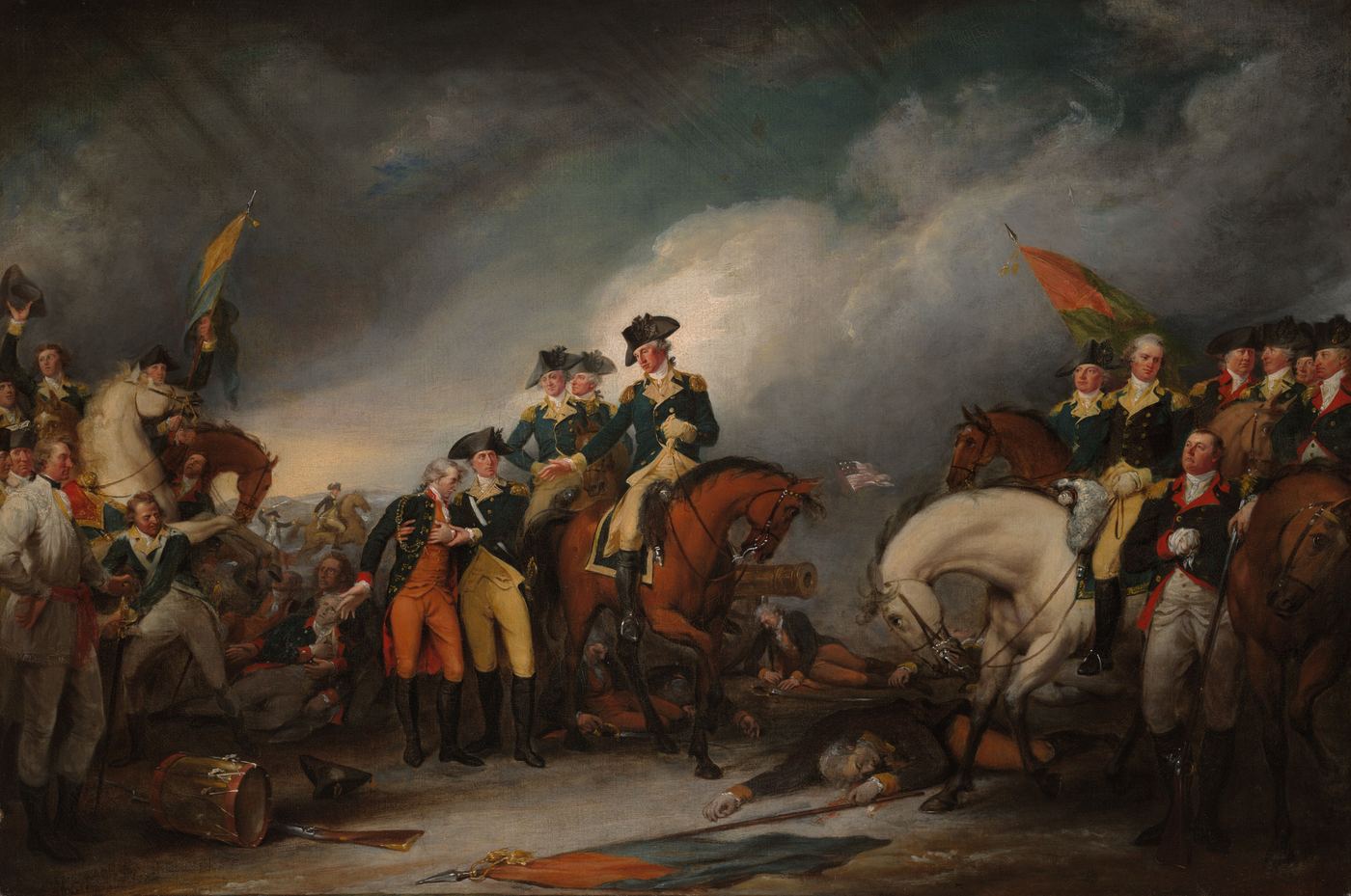
By the day after Christmas 1776, the legend of the invincible Hessians was gone. In the night George Washington ferried his army across the icy Delaware and took the Hessian garrison of Trenton by surprise. Rall was mortally wounded; almost a thousand Hessians were captured, Johannes Reuber among them. Were they drunk, as people in America still tell it? That belongs to the realm of legend. And did they sit around a decorated fir tree that night? Some Americans still say the Hessians brought the Christmas tree across the Atlantic. Could it be true? There is no evidence for it. But whoever puts this book under the tree may believe it, just a little.
The picture of that night, “Washington Crossing the Delaware,” is known to every American schoolchild. It was painted in 1851 by a German, Emanuel Leutze, in Düsseldorf. Howard Fast’s novel about the crossing was made into a television film, with Jeff Daniels as Washington. Ken Burns tells that night in his great documentary series on the Revolution, which premiered in the fall of 2025. And in 2025 a whole book appeared in America about how the Hessians lived through that night, by Steven Bier. One of its main characters: seventeen-year-old Johannes Reuber.
Six Hundred Prisoners, No Guard
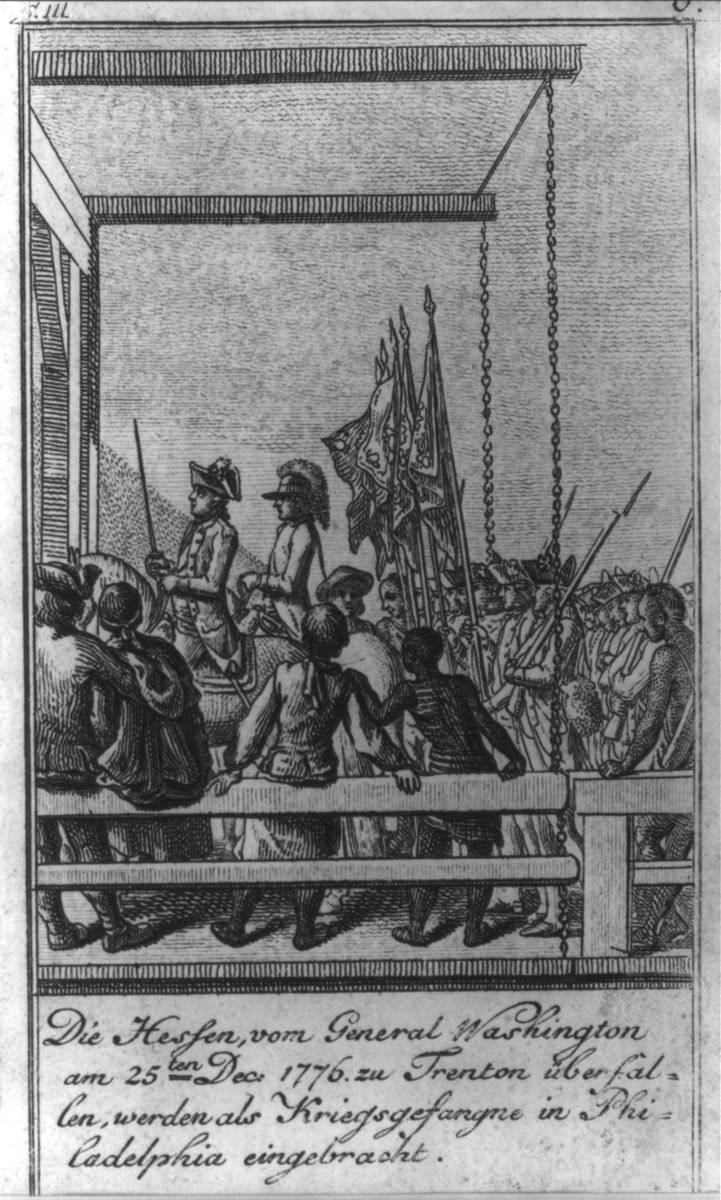
And then the story that still impresses me most. In October 1777, six hundred prisoners, Hessians and British soldiers, are being marched to Virginia. At the border the guard turns back. The old captain rides ahead and asks the prisoners to follow him. Some of the British prisoners disappear. The Hessians march on under their own sergeants and, as Reuber tells it, report in at Winchester two days later, in enemy country, without a single guard. In Lancaster, too, they had kept quiet when the British prisoners rioted. Were they that disciplined? That dutiful? Or did they simply know there was nowhere out there to go? Read for yourself.
Feared
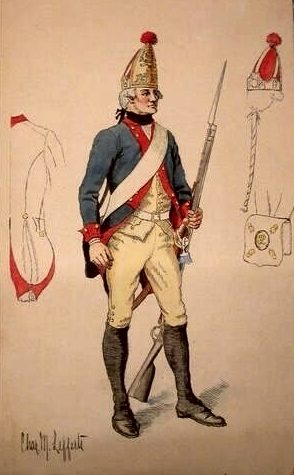
Were the Hessians really as brave as their reputation? As strong? The Americans certainly feared them. The Declaration of Independence complains of “large Armies of foreign Mercenaries.” To this day a headless Hessian rides through the night in Sleepy Hollow: in Washington Irving, in Walt Disney and in Tim Burton. In 1909, in one of the very first war films, D. W. Griffith’s silent “The Hessian Renegades,” the Hessians are the villains. And in 1950 Yosemite Sam takes on Bugs Bunny as “Sam von Schmamm, the Hessian.” In the end he gives up, a Hessian without the slightest fighting spirit.
Yet even during the war a young American officer, the future Vice President Aaron Burr, wrote that most reports of Hessian atrocities were unbelievable and false.
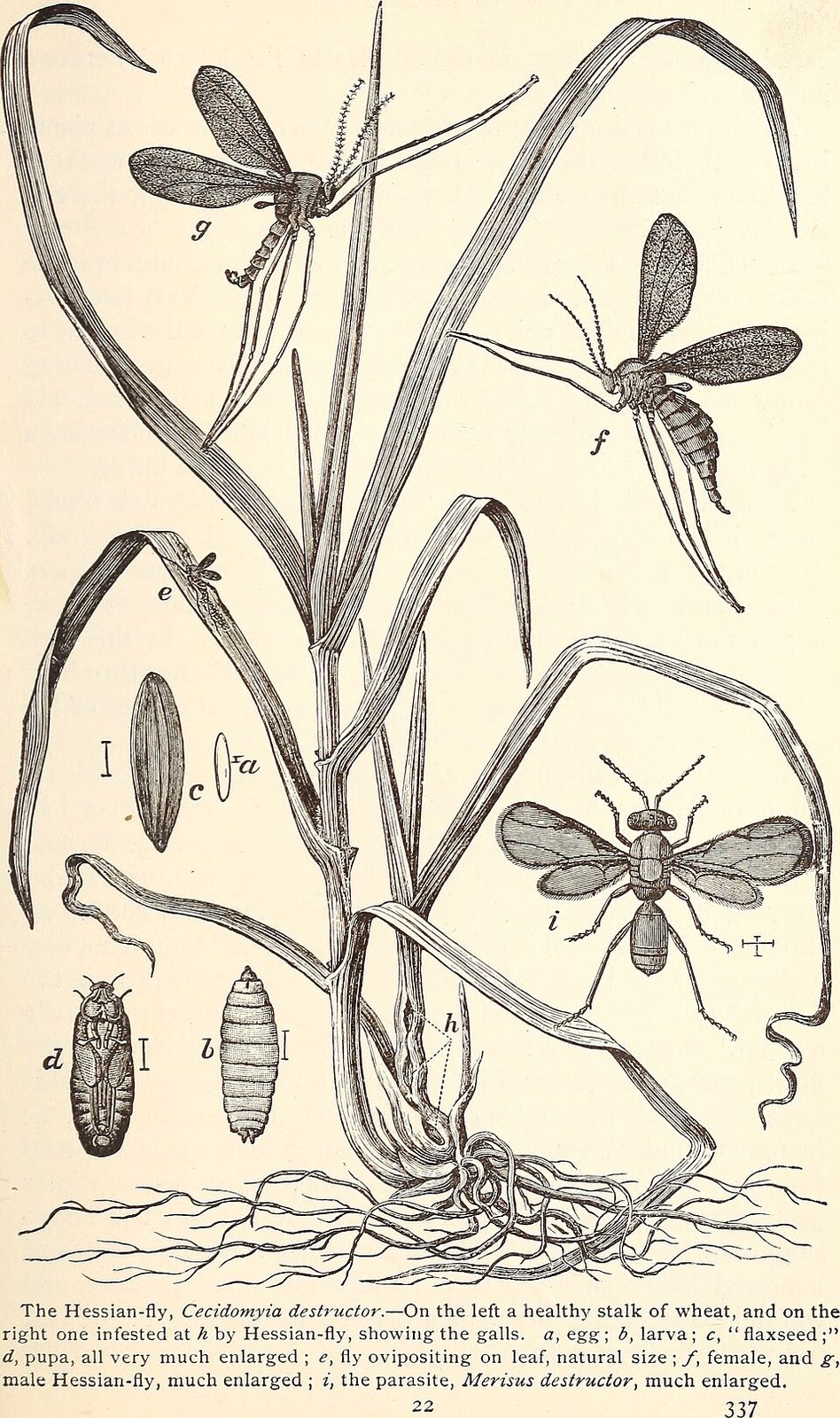
The Hessians were not feared only in America, though. In the old Empire, too, they had wreaked havoc, and some towns remember it to this day. When I was managing director of an American company in the Rhineland, I sat in a café in Kempen on the Lower Rhine with American business friends and explained why the street there is called Hessenwall, the Hessian Wall: in the Thirty Years’ War, on February 7, 1642, the Hessians are said to have breached the town wall at that very spot and taken the town. One of the Americans joked that back home nobody would name a street after something like that. A street, maybe not. But on the Hudson, north of New York, lies Hessian Lake, and the story goes that after a battle in 1777 dead Hessians were thrown into it. And one of the worst wheat pests in America is still called the Hessian fly, because people believed the Hessians had brought it over in the straw of their camps. Even Thomas Jefferson studied it eagerly. Were the Hessians to blame at all? A British investigation in 1788 found no such insect in Germany or anywhere else in Europe.
What the Hessians Brought to America
And what did the Hessians bring to America besides death and destruction? More than you might think.
First, themselves. The first Hessians had barely landed on Staten Island in August 1776 when America began courting them. On August 14 the Continental Congress resolved to offer every German soldier who left the British colors fifty acres of land, the free exercise of his religion and all the rights of a native. Barely two weeks later, on August 27, a second offer followed for officers, with land graded by rank. It was drafted by a committee of Benjamin Franklin, Thomas Jefferson and John Adams, probably with Jefferson holding the pen. Three Founding Fathers, courting the Hessians in person.
And then came the trick. Franklin had the resolutions translated into German and printed. A little tobacco was to be wrapped in each sheet, the way tobacconists did it, and a whole bundle was to drift across to Staten Island in a boat among all sorts of odds and ends. The soldiers would share the loot among themselves before their officers noticed what they were holding. On some of the sheets, Franklin wrote, you could still see the traces of tobacco. Whether the packets ever arrived is not recorded.
But many took America at its word. Of the roughly 30,000 German soldiers, about 5,000 deserted, by most estimates. And some slipped away before they ever boarded a ship, like Markus’s ancestor Semler. Many prisoners worked for farmers and found a second home among the Pennsylvania Germans around Lancaster. More than a thousand Hessian soldiers stayed for good. Their descendants live all across the United States today, and some have joined together, for instance in the Johannes Schwalm Historical Association, named after a Hessian who stayed.
They also brought their hands and their heads. Captured craftsmen practiced their trades; according to tradition, a stone powder magazine in Carlisle, Pennsylvania, was built by prisoners from Trenton, and today it is a museum. Some Germans even changed sides and fought in the Continental Army all the way to Yorktown. And more than one officer and army surgeon became an explorer of the New World. The Hessian Jäger officer Friedrich von Wangenheim described dozens of American trees in the middle of the war and later planted them in Prussian forests. German army surgeons studied American medicinal plants, turtles and the healing of injured nerves. One of them, Christian Friedrich Michaelis, was elected to Franklin’s American Philosophical Society in Philadelphia; another, Johann David Schöpf, gave the diamondback terrapin its first scientific description. A bird that a German soldier sent home to Marburg was described there as a new species.
And finally, their pens. The diaries, letters and maps of the Hessians are among the most precise sources we have on the America of those years. One letter is especially dear to me. In July 1777, in New York, the Hessian chaplain Friedrich Becker writes to a friend in Kassel, the war councilor Georg Ernst von und zu Gilsa. Becker is loyal to the Crown and considers the rebellious Americans faithless. And yet he looks closely. Since Trenton, he writes, their enthusiasm for liberty has been growing day by day. He gets hold of Thomas Paine’s pamphlet for independence, “Common Sense,” copies it out by hand and means to send it to Kassel. He marvels at the American children, so bright and so eager to learn, and at a people free of the prejudices of the learned. Becker marries an American; she dies in childbirth in 1787. He becomes the pastor of Weimar near Kassel, only a few miles from Reuber’s home village, and remains there until his death in 1825. I lived in that Weimar myself, and so here, too, a circle closes. Who knows how much of America came into the pulpit with him?
Trails Anyone Can Follow
Anyone who wants to know whether one of their ancestors was there can search for themselves. At the Archive School in Marburg, the HETRINA database was compiled by 1987, with the names of some 30,000 soldiers from Hesse-Cassel, Waldeck and Hesse-Hanau. Today it can be searched online in LAGIS, the Hessian regional history information system, in German and in English. The Hessian State Archives in Marburg keep the regimental lists and even the map of the Hessian attack on Fort Washington, “now Fort Knyphausen.” For the 250th anniversary of the treaty, the archives mounted an exhibition of their own in 2026. Between 1903 and 1914 the American William Lidgerwood had the Marburg records copied by hand. His collection is now in Morristown, New Jersey, where Washington had his winter quarters. And Reuber’s diary itself is in Kassel.
More on the soldier trade
A Small Country with a Big Army
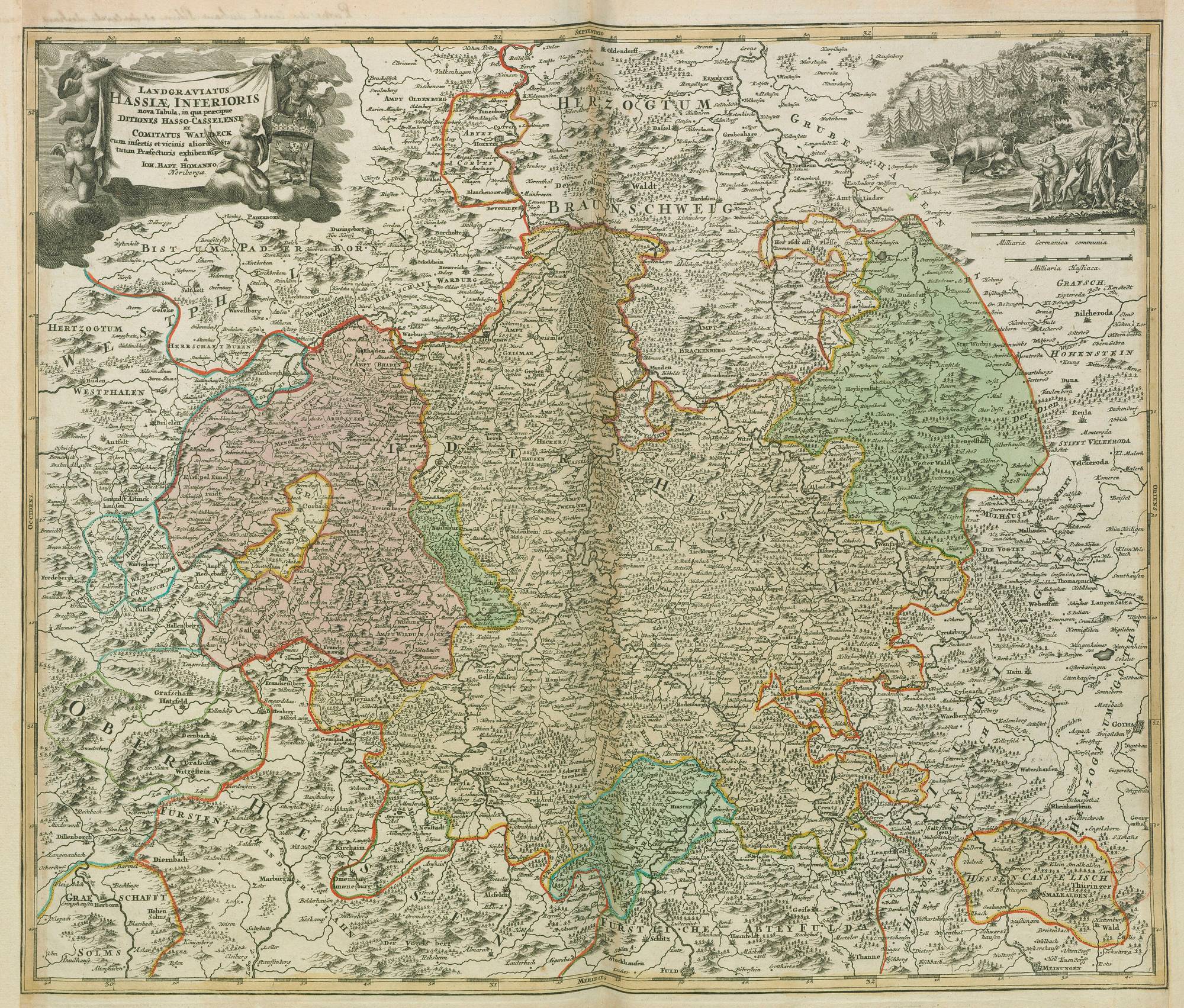
How does a boy from a village in northern Hesse end up on the Hudson? The answer begins in Kassel. The Landgraviate of Hesse-Cassel (a principality ruled by a Landgrave, as its prince was called) was not a large country; it had about 300,000 people. But it kept a standing army that had no reason to hide from anyone in Europe. No German state had more soldiers in proportion to its population. Almost every family had a son, a brother or a father who had once been to the New World.
On January 15, 1776, Landgrave Frederick II signed a treaty with King George III: 12,000 men for the war in America. In the end it was almost 17,000. In those days, a deal like that was called a subsidy treaty.
For most of the war, at least a third of the regular British army in America was German. The Americans made no distinction between a man from Kassel, Brunswick or Ansbach. To them, they were all “Hessians.”
A Lucrative Business
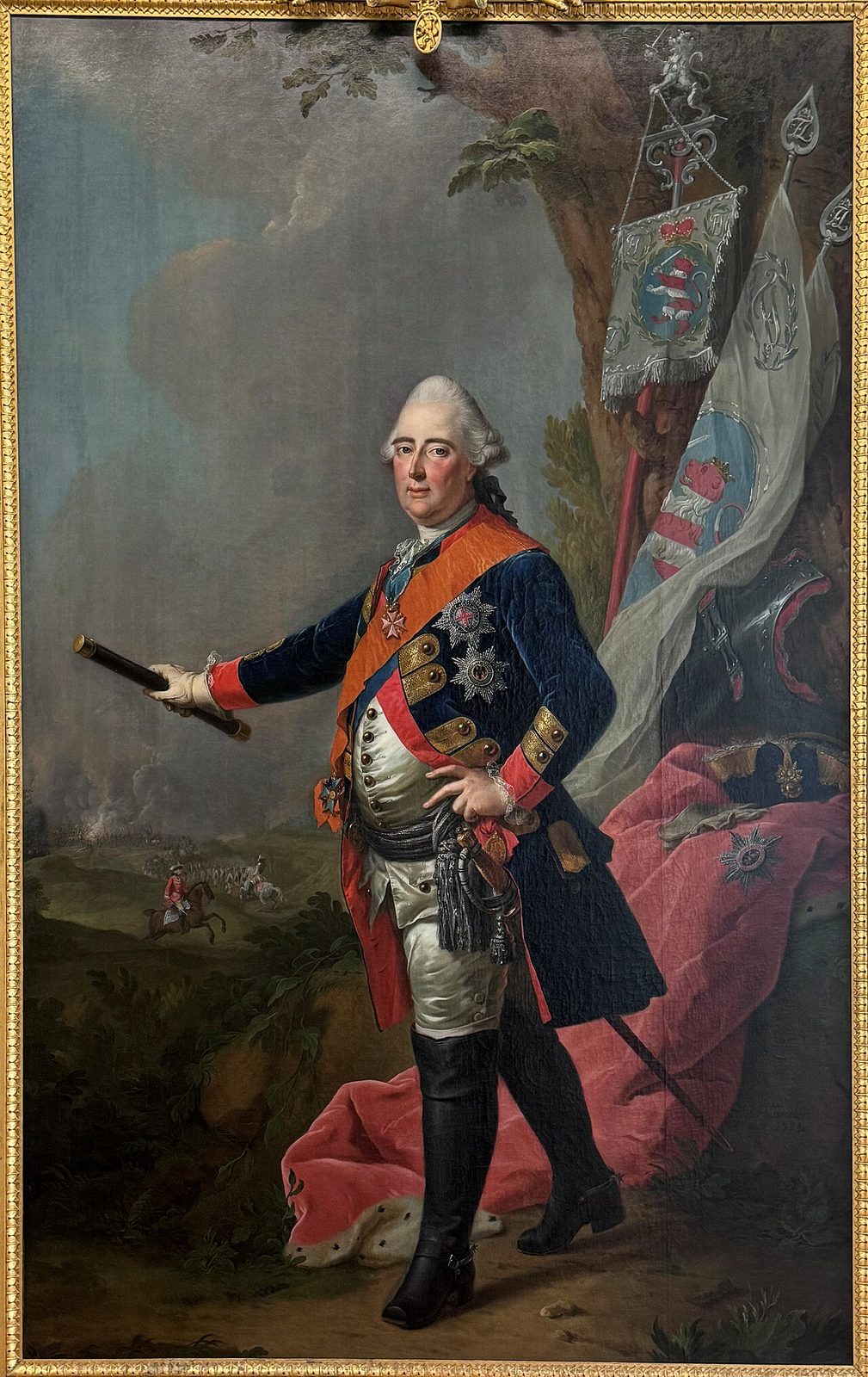
A business? Certainly, and a rather clever one. In 1776 the poet Christian Friedrich Daniel Schubart did the math for his readers: the Landgrave, he wrote, was getting “450,000 thalers [the silver coin of the day] a year for his 12,000 brave Hessians, most of whom will find their grave in America.”
In the end some 21 million thalers flowed from London to Kassel. In pure purchasing power that would be well over a billion dollars today. But that says little, because at the time it was a fortune for an entire country. A working man in Hesse earned perhaps 50 thalers a year, and the Landgraviate had about 300,000 people. With the money from London you could have paid every one of them, from infant to graybeard, more than a year’s wages. Or put another way: it was roughly what the United States paid in 1803 for the whole vast Louisiana Purchase.
The landgraves grew rich on it, very rich. William IX, Frederick’s son, was one of the richest princes in Europe. His inheritance in 1785 amounted to an estimated one-twentieth of what all of Great Britain produced in a year; today that would be, by estimate, well over a hundred billion dollars. He lent money to princes and states and became one of the most sought-after lenders in the Empire and in all of Europe. Partly with this money, Wilhelmshöhe Palace and the Löwenburg castle were built and the art collections grew; to this day they form the heart of Kassel’s museums. Did it also help to build the Fridericianum, one of the first public museums on the Continent, where the documenta art exhibition is at home today? In 2026 the Hessian State Museum in Kassel even devoted a guided tour to the question of why William IX was so rich.
And the money kept working. When Napoleon occupied Hesse in 1806 and the Elector (William IX, Landgrave, from 1803 Elector of Hesse) had to go into exile, 550,000 pounds of his fortune were invested in London, in British government bonds and in gold. In today’s purchasing power that is close to 60 million pounds; measured against the economy of the day, more than three billion. Of all places it was London, where the subsidies had once come from, that now made the Hessian princely money grow, and when the Elector came home in 1813 it had earned handsome interest.
And today? Let’s not fool ourselves: the business of soldiers has never quite gone away. Now it is called an alliance commitment, a foreign deployment or a security service, and the accounting is different. Since 1815 Gurkhas from Nepal have served the British Crown; today about four thousand of them are in British service. The money that Nepalis abroad send home, Gurkhas included, has recently amounted to more than a quarter of their country’s economy. Kassel in 1776 is not so far away after all.
Not everyone thought the business was clever, Schubart least of all. In 1784 Friedrich Schiller put the soldier trade on stage: in “Intrigue and Love,” the young men sold to America pay for the jewels of a prince’s mistress. In 1798 Joseph Görres mocked the Landgrave of Kassel with a made-up sale notice for “12,000 head of human cattle.” And a young Saxon, Johann Gottfried Seume, on his way to Paris, fell into the hands of Hessian recruiters beyond Eisenach. They locked him up in the fortress of Ziegenhain and shipped him off to Canada. Later he became famous for walking all the way to Syracuse in Sicily. Coin dealers still tell the story that the Kassel “star thalers” of 1776 were used to compensate the families of fallen soldiers, and that this gave the Brothers Grimm their fairy tale of the Star Money. A lovely story. There is no evidence for it.
A Book Among Old Friends
Werner Brandau traced Reuber’s path in his book “Im Dienst der britischen Krone” (“In the Service of the British Crown”), volume 6 of the Vellmar history series. The title is right, but it says too little about what is in this book. That is why the new edition bears a different one. Brandau’s text keeps its tone. Corrections were made only where the sources prove otherwise, and they are documented in the notes and on the companion website.
This edition is also a gift among old friends. It appears in German and in English at the same time, and it was a joy to make Reuber’s journey readable for the people through whose country it led. I thank Markus Lemke, who helped with proofreading the English text for readability, with all my heart. This book is for him, for his family and for everyone whose family story begins somewhere in Hesse. Werner Brandau, Johannes Reuber, Markus Lemke and the Semlers, the library in Kassel: here everything comes together that belongs together.
If you still want more after this: fifty years ago, in December 1976, German television told of Hessian soldiers in America in the three-part drama “Der Winter, der ein Sommer war” (“The Winter That Was a Summer”). Every year thousands march up Fifth Avenue in New York’s Steuben Parade, named for a German who stood on the other side and drilled Washington’s army. And almost two hundred years after Reuber, the direction reversed: American soldiers came to Hesse, and one of them was named Elvis Presley. He served in Friedberg. A Hessian conference for the anniversary bore the lovely title “More than Hessian Mercenaries and Elvis Presley.”
We were determined to finish this book by Christmas 2026. Because on December 26, 2026, it will be exactly 250 years since Johannes Reuber had to lay down his arms at Trenton. Did we make it? You are holding the answer in your hands.
Kassel, fall 2026
Normann Günther
Casseler Buch und Bild Verlag
Werner Brandau
“There is not much in the history of Vellmar that is sensational or spectacular.” That is the sentence with which I began the preface to my book Im Dienst der britischen Krone [In the Service of the British Crown]. And yet hardly any other person from Vellmar has subsequently received so much attention as Johannes Reuber of Niedervellmar.
In 1986, together with a few like-minded people, I founded the Arbeitskreis Vellmarer Geschichte [Vellmar History Working Group]. Since then I have been occupied with the history of our home region, have written articles about it in the daily newspaper, and have published the Vellmarer Geschichtsbücher [Vellmar History Books]: Das Tagebuch des Ortsdieners Deichmann [The Diary of Village Beadle Deichmann], Die Schulprotokolle von Obervellmar [The School Records of Obervellmar], Die Chronik der Kirche Obervellmar [The Chronicle of the Obervellmar Church], 300 Jahre Bürgermeister in Obervellmar [300 Years of Mayors in Obervellmar]. The book about Johannes Reuber is the sixth volume in this series.
Johannes Reuber was born in Niedervellmar in 1759, the only child of a day laborer. From 1776 to 1783 he took part as a soldier in the American Revolutionary War and wrote down his experiences in a diary. That was not something to be taken for granted: in those days, by no means all young people could read and write, and in the marriage records of the time some still signed with three crosses. It is thanks to his notes that we are so well informed about the events of that time.
The original diary, furnished with many drawings, is kept in the Kassel University Library. It is hard to read, but its content is impressive. My list of sources includes the essay by F. W. Junghans on Reuber’s diary in Hessenland [a Hessian history journal] of 1894, the register of the Hessian troops in the American Revolutionary War (HETRINA), and the Ortssippenbuch Niedervellmar [Niedervellmar Family Register]. Even then I noted that, because the same names occur so often, HETRINA cannot be used to arrive at a reliable count.
For this edition, the Casseler Buch und Bild Verlag compared my text with the sources and, where necessary, corrected it with supporting evidence. My tone has been preserved in the process; only what had to be corrected was changed.
With this book I wish to remember the Hessian grenadier Johannes Reuber and, at the same time, to contribute another building block to a chronicle of Vellmar.
Werner Brandau
Vellmar, fall 2026
Foreword as printed in the book; introduction rearranged for the web. The German version is on the German page.